
Our secure portal to access member benefits and information.

Learn more about a starting a career as Sheet Metal Apprentice.

Ready to apply for membership?  Your journey starts here.

Label it. Scan it. Report it. For Jobs, Wages, and Benefits.

Training. Representation. Support.

What We Do For Our Members?

The core function of any union is collective bargaining. This process involves negotiating with employers on behalf of the union members to secure better wages, benefits, and working conditions. By negotiating as a group rather than as individuals, members can achieve more favorable terms and protections. Unions often provide various benefits to their members, such as health insurance, retirement plans, and other forms of financial support. These benefits are typically negotiated as part of the collective bargaining process. Unions negotiate collective bargaining agreements that often lead to higher wages compared to non-unionized positions. The collective power of the union helps secure competitive pay rates. Union members typically receive better benefits packages, including health insurance, dental and vision care, and retirement plans. These benefits are negotiated as part of the union contract and often exceed what is available in non-union jobs.

  • Higher Wages: According to the U.S. Bureau of Labor Statistics (BLS), unionized workers earned 11% more on average compared to non-unionized workers in 2023. U.S. Bureau of Labor Statistics, "Union Members Summary," January 2023.
  • Comprehensive Benefits: The Economic Policy Institute (EPI) reports that union workers are 30% more likely to have employer-provided health insurance compared to non-union workers. Economic Policy Institute, "The Benefits of Unionization," June 2020.

The union works to ensure that members have job security. This includes negotiating terms related to job stability and working conditions, as well as advocating for fair treatment in cases of disputes or layoffs. Unions work to ensure fair treatment of their members. They provide a structured process for addressing grievances, ensuring that workers are treated justly and have recourse if they face unfair practices or discrimination. Union contracts often include provisions that protect against arbitrary layoffs and ensure that any workforce reductions are handled according to established rules.

  • Fair Treatment: Data from the National Bureau of Economic Research (NBER) indicates that unionized workers are less likely to experience unfair treatment due to the structured grievance processes. National Bureau of Economic Research, "Labor Market Issues and Labor Unions," 2018.
  • Layoff Protections: The BLS shows that unionized workers generally have stronger protections against layoffs, often due to seniority provisions in union contracts. U.S. Bureau of Labor Statistics, "Union Membership and Wage Data," 2023.

Safety is a major concern in the sheet metal industry due to the heavy machinery and potentially hazardous materials involved. The union often provides or facilitates training programs to ensure that members are up to date on safety standards and practices. This helps reduce workplace accidents and injuries. Unions are proactive in advocating for stringent safety standards and regulations that safeguard workers’ health over the cost to employers. They work to ensure that workplaces are compliant with safety laws and that members have the necessary training and protective equipment. This reduces the risk of accidents and enhances overall workplace safety.

  • Safety Standards: Research from the Center for Economic and Policy Research (CEPR) found that unionized workers experience 25% fewer workplace injuries. Center for Economic and Policy Research, "The Benefits of Unions: A Study of Workplace Safety," 2020.
  • Training Programs: The National Skills Coalition found that unionized workers are 45% more likely to receive job-related training compared to non-union workers. National Skills Coalition, "Training and Skills Development in Unionized Workplaces," 2019.

SMART Local 103 offers support and professional representation to its members. If a member faces issues related to their job, such as disputes over working conditions or wrongful termination. Your union officials routinely represent members in a variety of issues with employers or benefits administrators. This includes help with issues like wrongful termination, wage disputes, access to earned benefits and other work-related problems. If members encounter a problem related to their employment, union officials can provide counsel, intercede on the workers’ behalf and/or connect them with professionals who specialize in the issue the member is currently facing.

  • Dispute Resolution: According to the BLS, unionized workers are 20% more likely to have access to formal grievance procedures. U.S. Bureau of Labor Statistics, "Union Membership and Grievance Procedures," 2023.
  • Legal Assistance: Data from the AFL-CIO indicates that union members have better access to legal resources for resolving employment issues. American Federation of Labor and Congress of Industrial Organizations (AFL-CIO), "Union Legal Support," 2022.

The union may offer opportunities for professional development, such as workshops, certifications, and training programs. This helps members advance their skills and stay competitive in the industry. Unions often provide access to training and certification programs that help members advance their skills and qualifications. This can lead to career growth and increased earning potential. Many building trades unions offer structured apprenticeship programs that combine on-the-job training with classroom instruction, providing a comprehensive path to becoming a skilled tradesperson.

  • Skill Advancement: The AFL-CIO reports that union workers are 30% more likely to participate in job-related training. American Federation of Labor and Congress of Industrial Organizations (AFL-CIO), "Union Training Programs," 2021.
  • Apprenticeship Programs: Union apprenticeship programs have a 45% higher completion rate. U.S. Department of Labor, "Apprenticeship Programs: Union vs. Non-Union Completion Rates," 2022.

Beyond individual negotiations, the union represents the interests of sheet metal workers on a broader scale. This includes advocating for industry-wide standards, participating in policy discussions, and influencing legislation that affects workers. Unions advocate for policies and legislation that benefit workers in the building trades. This includes lobbying for labor laws, safety regulations, and other industry-specific issues. Unions represent the interests of their members in discussions with industry leaders, regulatory bodies, and other stakeholders, helping to shape the laws that will determine the future of the trades. We do not entangle ourselves in political actions that will not directly serve our members best interests, as it relates to; pay, benefits, safety, training or working conditions.

  • Political Advocacy: The Economic Policy Institute (EPI) reports that unions have successfully advocated for stronger labor laws and safety regulations. Economic Policy Institute, "The Role of Unions in Shaping Labor Policy," 2020.
  • Industry Representation: The BLS indicates that unionized industries often see significantly higher improvements in working conditions due to collective bargaining. U.S. Bureau of Labor Statistics, "Union Impact on Industry Standards," 2023.

Being part of a union provides opportunities to connect with other professionals in the industry. This network can be valuable for sharing knowledge, finding job opportunities, and receiving support. Membership fosters a sense of community and solidarity among workers. This collective spirit can be empowering and offer emotional and professional support.

  • Professional Network: Union membership provides access to extensive professional networks. Bureau of Labor Statistics, "Networking Benefits for Union Members," 2022.
  • Sense of Belonging: Gallup surveys show that union members report higher job satisfaction and a greater sense of belonging. Gallup, "Union Membership and Job Satisfaction," 2021.

Unions negotiate for reasonable working hours and overtime pay. This helps ensure that members have a better work-life balance and are compensated fairly for extra hours worked. Union contracts often include provisions for paid leave, such as vacation days, sick leave, and family leave, which contribute to overall job satisfaction and personal well-being.

  • Fair Working Hours: Union contracts often ensure reasonable working hours and overtime pay. U.S. Bureau of Labor Statistics, "Unionized Workers and Work Hours," 2023.
  • Paid Leave: The Economic Policy Institute (EPI) indicates that union workers are 30% more likely to have paid leave benefits. Economic Policy Institute, "Union Benefits: Paid Leave and More," 2022.
What Our Members Say

Don’t Take Our Word for It. Ask Our Members!

Our members take pride in mastering their trade, building strong communities, and enjoying the support and solidarity that comes with being part of the SMART Local 103 family.

Contact Us
img

WORK UNION, LIVE BETTER!

You’re already doing the work, why are you leaving money on the table?

WHO WE ARE

A Skilled Workforce

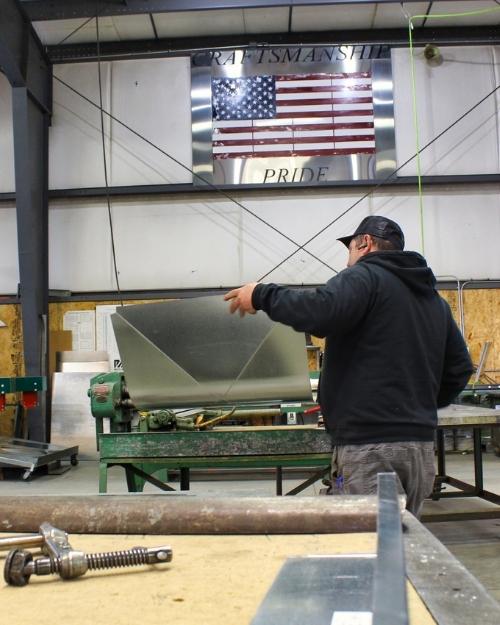
Throughout Local 103, we are currently helping to design and build hundreds of construction projects. Our membership is made up of over highly skilled craftspeople that are trained to perform a wide selection of skills who stand behind their work with pride, we continue to innovate and raise the standards of our industry to new heights.


Apprenticeship Opportunities

SMART Local 103 provides premier apprenticeship training programs to ensure men and women receive the highest level of training that allows them to become a confident UNION sheet metal worker.

Contact An Organizer for More Information

No Pressure, Just the Facts… Then decide what’s right for you and your family.

×
img